
Our story begins in a small hill town in western Sicily, about 50 miles from Palermo. From there, between about 1886 and 1920, our Tripolino and Romano ancestors left everything they knew and crossed the ocean. Some landed in New Orleans and some at Ellis Island, but most of them found their way to the same place: the cigar-factory neighborhood of Ybor City in Tampa, Florida.
I started gathering these stories more than 25 years ago, with a few photographs, a handful of records, and the memories of my Nani. This page is for everyone who comes after us, so they will know where they come from and what it took to get here.
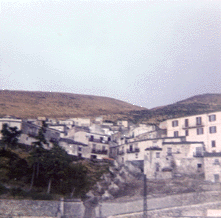
Contessa Entellina: a Sicilian village with Albanian roots
Contessa Entellina sits on the north face of Monte Genuardo, about 1,900 feet up, above the valley of the Belice River. It was founded in 1450 by Albanian refugees, known as the Arbëreshë, who had fled across the Adriatic. More than 500 years later, their descendants still speak an old Albanian dialect, still wear the traditional costumes on feast days, and still worship in the Byzantine rite.
The town was first called simply Contessa, probably after a 14th-century countess who held the land. In 1875 “Entellina” was added, after the ancient city of Entella that once stood nearby.
Almost every one of our ancestors on this side, the Tripolinos, Romanos, Marinos, Salvatos, Graffatos and Schiros, was born there. Our tree goes back to the 1700s in Contessa’s church records, and to Giuseppe D’Ippolito, born about 1731.
Pietro Tripolino, by way of New Orleans
Our immigrant Tripolino, Pietro Tripolino, was born in Contessa on January 26, 1858. He arrived in New Orleans in 1883, one of thousands of Sicilians who came through that port in those years. Many of them worked the sugar and cotton fields of Louisiana, and so many came from Contessa that at one time there were said to be more Contessa natives in New Orleans than in Contessa itself. On September 8, 1886, they founded their own mutual-aid society, the Società Italiana di Beneficenza Contessa Entellina.
At one time there were said to be more Contessa natives in New Orleans than in Contessa itself.
Pietro married Maria Restivo, also from Contessa, in New Orleans on January 18, 1890. She had arrived only two weeks earlier, on January 3, aboard the SS India from Palermo. I found their marriage record in the Archdiocese of New Orleans archives, at what was then St. Anthony’s Chapel. Their son, Antonino “Tony” Tripolino, was born on July 28, 1893.
By 1900 Pietro was in Ybor City, where he married his second wife, Maria Francesca Rotolo, whose family came from Sambuca, the next town over from Contessa. Pietro lived in Tampa for the rest of his life and died there in 1949.
Other Tripolinos stayed in New Orleans, and some went on to Chicago and Detroit. I’m still working out how they connect to us (see Still searching, below).
The Romanos cross the ocean, one ship at a time
The Romanos didn’t come all at once, and some of them crossed the ocean more than once. Our patriarch, Filippo Romano, and his wife Antonina Marino had married in Contessa around 1880 and raised nine children there.
- Filippo made the first trip, sailing from Naples to New York in July 1909. He went home to Sicily again, but that trip opened the way for everyone else.
- His son Francesco Romano arrived in New York in March 1911, sailing from Le Havre, France.
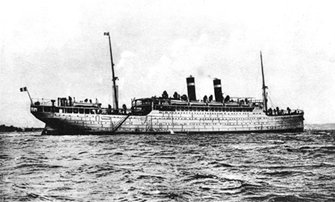
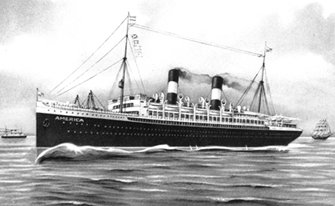
- Giovanni (John) Romano, the eldest son, sailed into Ellis Island on the San Guglielmo on September 16, 1912, with his wife Anna Giovingo. He told the inspectors he was going to his uncle, Paolo Pirillo, at 779 Main Street in Tampa.
- Three months later, on December 28, 1912, Filippo came back on the Canada, this time with his eldest daughter, Andenzia, my great-grandmother.
- Domenico Romano came on the Venezia from Palermo at 26 years old, in good health and with $15 in his pocket.
- Finally, in 1914, Antonina followed with the younger children, Salvatore, Rosa, Carmela and Vincenzo, along with Domenico’s wife, Rosaria Cuggino, and their baby son, Filippo.
From Ellis Island they all made their way to Tampa.

Ybor City and 12th Avenue
Ybor City was only about 25 years old when the Romanos arrived. Cigar maker Vicente Martinez Ybor had moved his factories there from Key West in 1885, and within a few years the neighborhood had grown bigger than Tampa itself. It was a mix of Cuban, Spanish and Italian families, and many of the Italians, like ours, came by way of New Orleans.
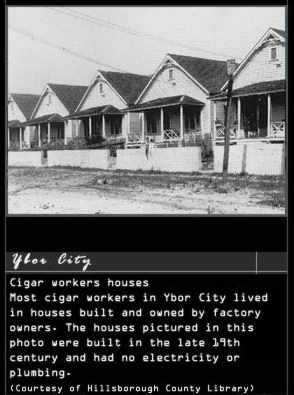
Our family went to work in the cigar factories and settled on 11th and 12th Avenues, in row houses built for cigar workers. They stayed close. Tony and Andenzia were living at 2323 Twelfth Avenue by 1917, and Filippo and Antonina later lived a few doors away at 2316. Antonina died at home on 12th Avenue in 1936, and Filippo in 1942.
The Italian Club, L’Unione Italiana, was the center of their social life, and many of our family are buried in its cemetery.


Tony and Andenzia

Andenzia Romano had been in America just over two years when she married Antonino “Tony” Tripolino in Tampa on April 17, 1915. She was 19. Tony was Pietro’s son, so their marriage joined our two immigrant families.
Antonino and Andenzia Tripolino with sons Peter and Philip, 1924
Tony is the brick wall in our family tree. He never spoke about his mother, his father or his family, so almost everything we know about his early life comes from records. On his World War I draft card he gave his birthday as July 28, 1893, said he was a natural-born citizen, and named Tampa as his birthplace. I’ve long believed he was really born in New Orleans, where his parents married, but I haven’t been able to prove it. When I sent for his 1893 birth certificate from Tampa, I was told none exists. That proves little either way, since Florida didn’t require birth registration until 1899.
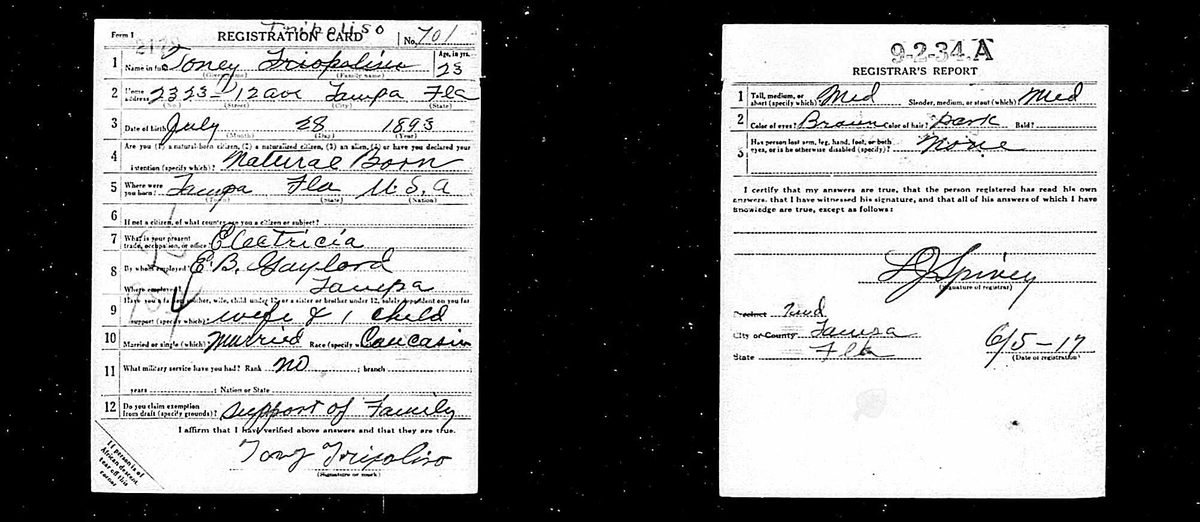
The same card shows Tony working as an electrician for E. B. Gaylord in Tampa and supporting a wife and one child. A newspaper caption from 1924 later called him a fine citizen and Tampa’s first Italian electrical contractor. Together Tony and Andenzia raised five children: Peter, Mary, Philip, Antoinette and Joe.
Andenzia died in 1958, after more than 40 years in Ybor City. Tony lived until 1977.
At the 1940 New York World’s Fair. In back: Maria Alaino Asmundo, Andenzia, and Rosina Guida Romano. In front: Jenny Alaino Giovingo.

Nani

Their daughter, my grandmother, was born Antoinette Tripolino in Tampa on February 13, 1927. For years we all believed her name was Antonina, and I only learned later that it was really Antoinette. Everyone called her Lena, and to us grandchildren she was Nani. She grew up in Ybor City, and on May 12, 1943, at just 16, she married Willie Betha “Bill” McKendree Jr., my Granddaddy.
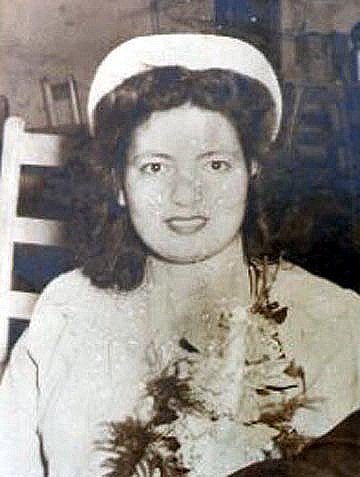
Lena, circa 1939
Nani was a joiner and a leader. The Tampa papers found her again and again: as toastmistress at a Fire Department banquet in 1952, at the American Can Company in 1956, as president of her VFW Auxiliary post in 1983, and as recording secretary of the Dade City Women’s Club in 1984. In 1975, she and Granddaddy even made the news for helping to catch robbers.
She started our search for our roots, and she passed away in Dade City on June 23, 1995.
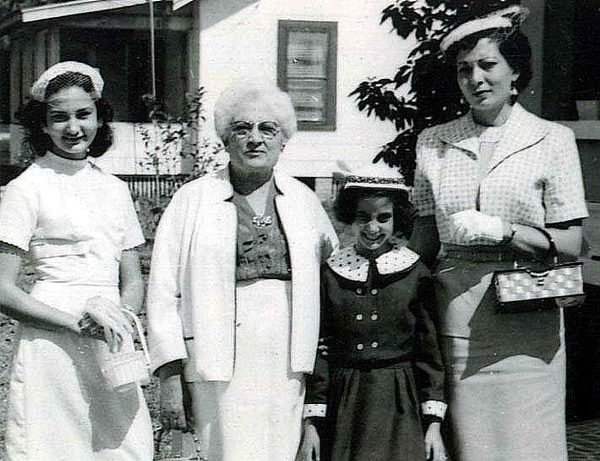
Left to Right: My mother, Carol Diane McKendree, great grandmother Andenzia Romano Tripolino, Aunt Sharon Elaine McKendree, and my Nani, Antoinette (Lena) Tripolino McKendree.
Going home to Contessa
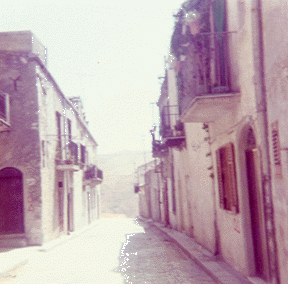
In 1974, Nani made the trip back to Contessa Entellina with family: her sister Mary Tripolino Lazzara and Mary’s husband Ralph, her uncle Vincenzo “Jimmy” Romano and his wife Rosina. There they met Anna Romano Bruno, the Romano sister who had stayed behind in Sicily. Nani didn’t take many notes, but she took photographs and brought home a postcard of a courtyard in the village. Those pictures are some of the treasures on this site.
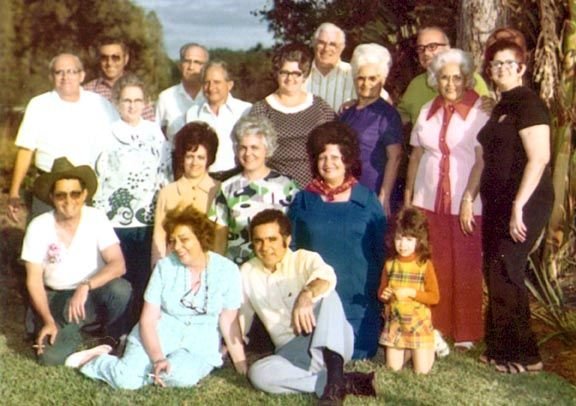
The next year, 1975, the family gathered for a reunion in Darby, Florida.

Left to Righ front rowt: Mary Tripolino Lazzara, Anna Romano Bruno, Rosa Guida Romano, Ralph Lazzara, III. Back row: Vincenzo (Jimmy) Romano, Unk. lady, Antoinette (Lena) Tripolino McKendree.

Still searching
A family history is never finished. There are still Tripolinos I’m sure are ours but haven’t connected yet: Tripolinos who stayed in New Orleans, others who went on to Chicago and Detroit, and Salvatore Tripolino of Santa Margherita di Belice, the only Tripolino in Sicily who answered my letters.
If you recognize someone on this site, have a photo or a story to share, or think we might be related, I would love to hear from you.
This site would not exist without the people who helped along the way: my Nani and Granddaddy; my Internet cousins Mike Giovingo and Jovanna Romano Williams; Aunt Lena Romano Leto, who shared her photographs; Lisa Cotton, David Zerga and Jeanette Tamborello. Thank you.
Header photo: [Gspata], CC BY-SA, via Wikimedia Commons